Stonefly Co-Housing in Twisp
Aging well in the Methow—
together, in town, thoughtfully designed.
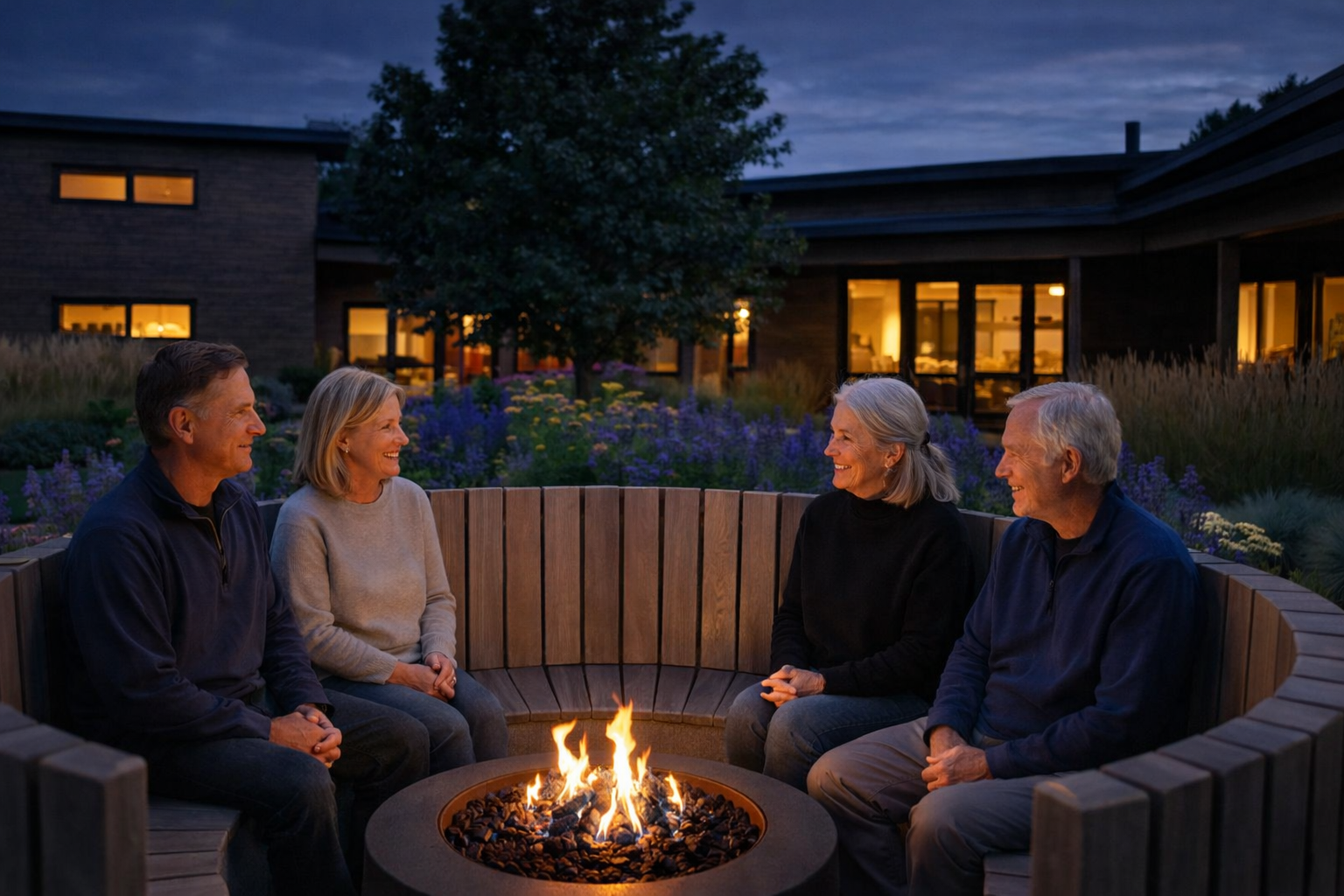
Welcome to the Stonefly Community
Stonefly is a small co-housing neighborhood in Twisp with private homes centered around a shared community house and common spaces, designed for adults 55+. It’s for people who love the Methow and want to stay here as they age, with real community, easy access to town, and a high standard of design and build quality. Contact us

Completion Timeline
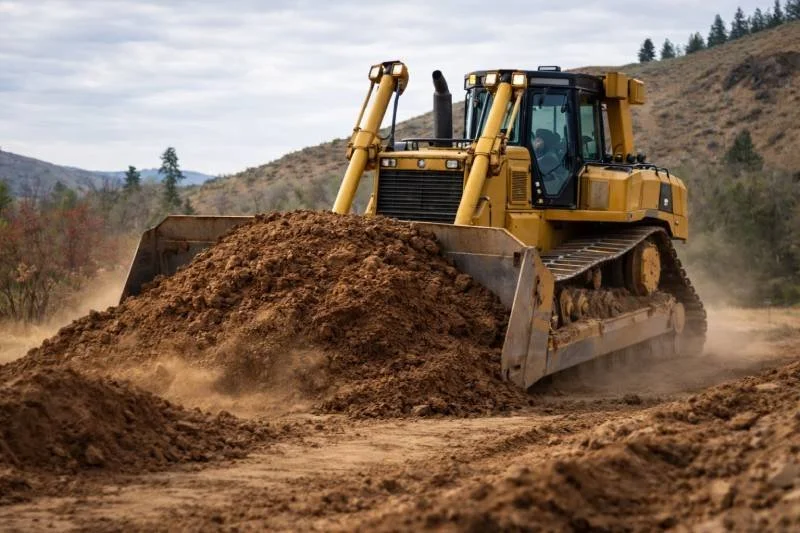
2026 –
Roads, utilities, and site infrastructure move forward; members finalized.
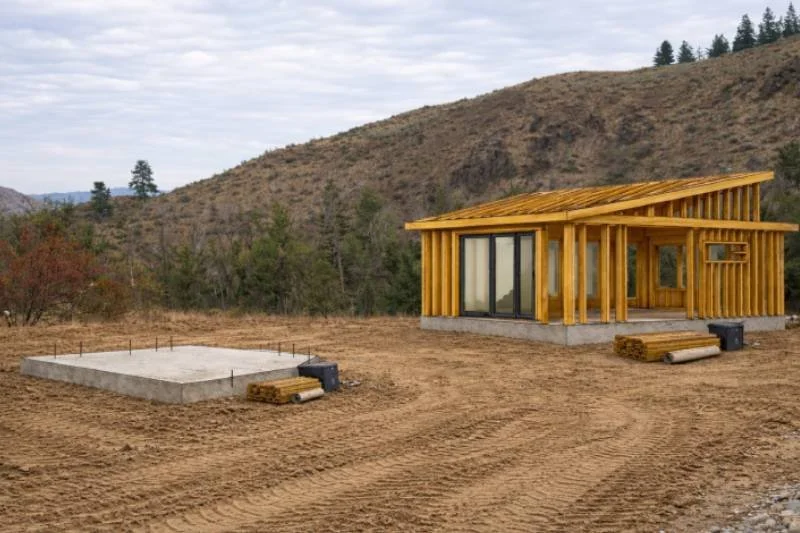
2027-28 –
Construction of homes and community house
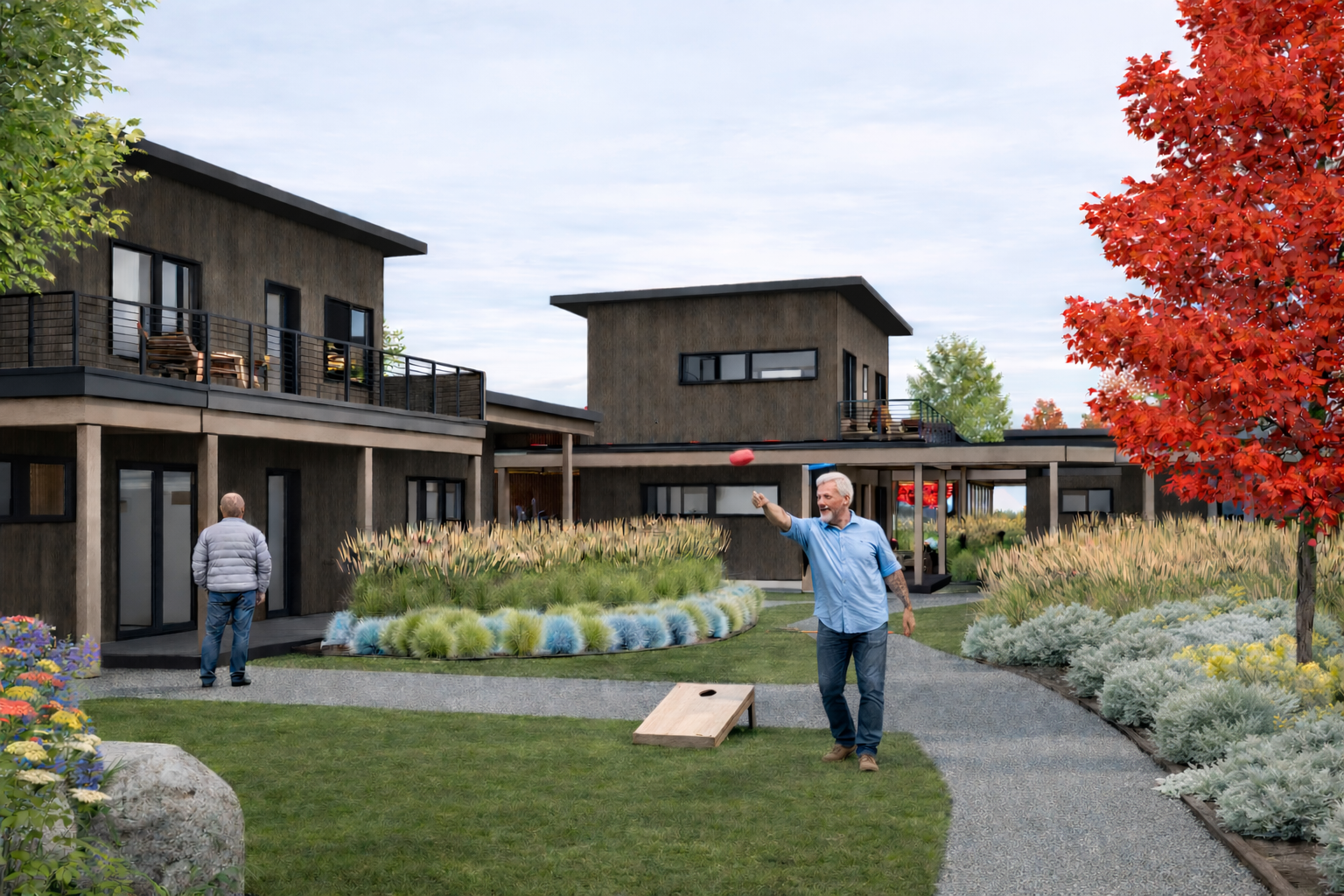
Early 2029 –
Homes and shared spaces completed; move-in and community launch
Community
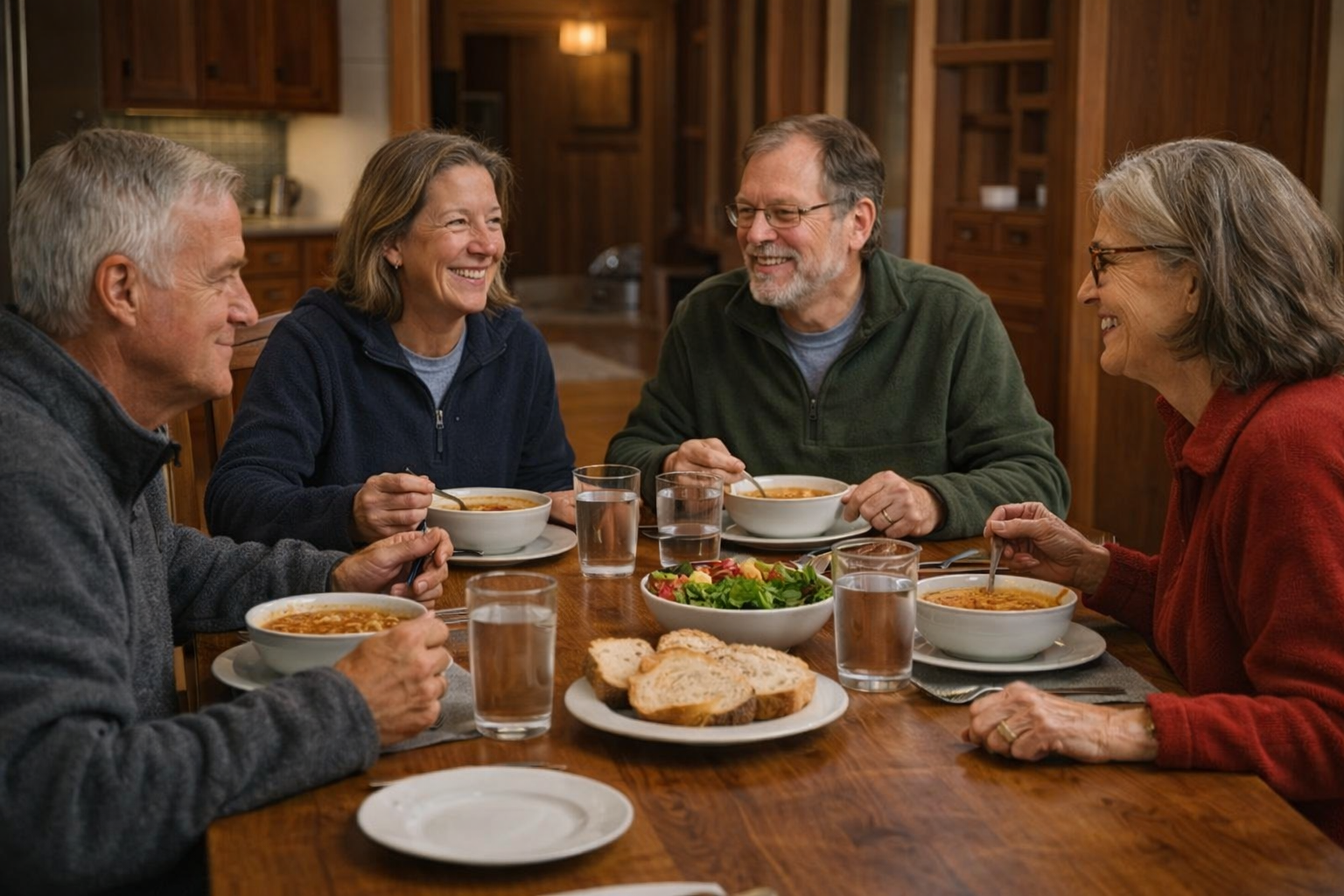
Stonefly is built for connection and mutual support. It’s the kind that happens naturally when neighbors share welcoming common spaces and see each other in the rhythm of daily life.
Residents also shape the community together and share simple responsibilities that keep it running well. The community house is a hub for shared meals, casual conversations, and gatherings. At the same time, each home offers privacy and independence. It’s a way to live in the Methow with more belonging, more ease, and neighbors you can count on. Contact us
In Town, Close to Everything
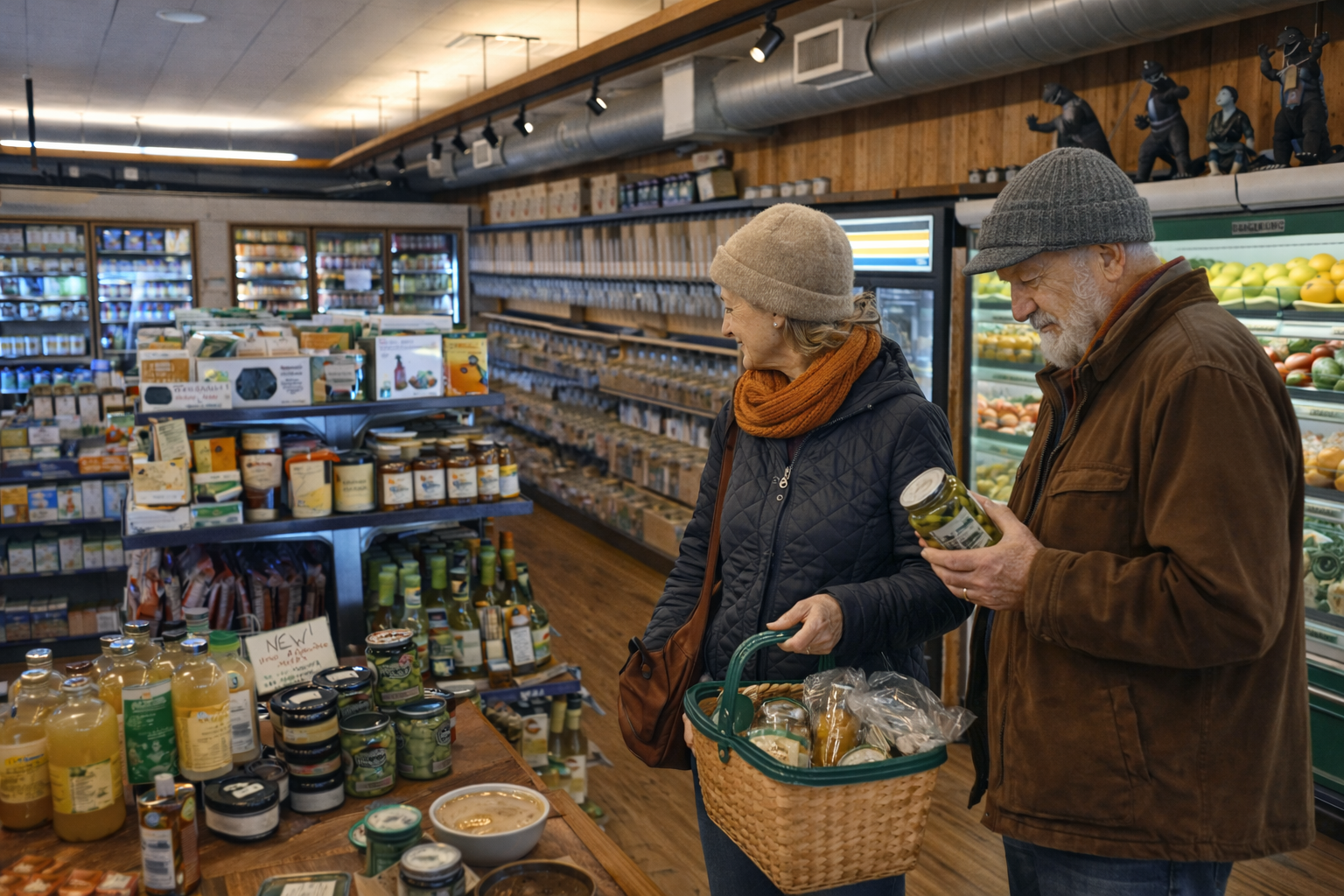
The Methow’s beauty often comes with tradeoffs. Many homes are a long, weather-dependent drive from groceries, restaurants, and everyday services. That distance doesn’t just complicate errands; it can also shrink social life over time. Even if you’re still comfortable making the trip, friends may be less willing to drive out as they age too.
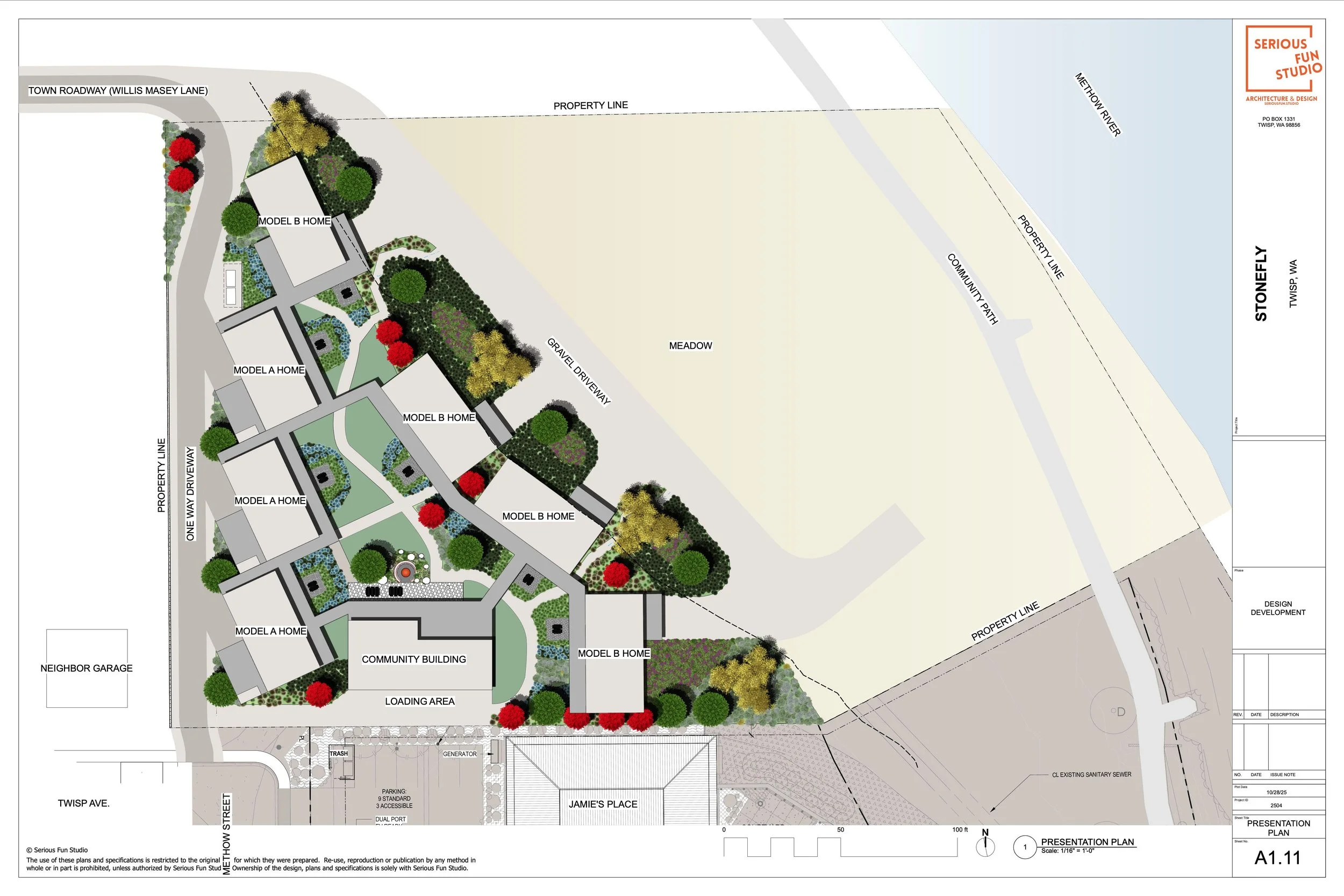
Stonefly is intentionally different. It’s located in the heart of Twisp, right next to the Methow River walking path and a nearby park. From here, it’s easy to walk to shops and everyday errands instead of driving for everything.
When you want to get out and engage, Twisp offers live performances at the Merc Theater, events and classes at TwispWorks and the Community Center, and a welcoming mix of pubs and places to eat. Contact us
Design and Craft
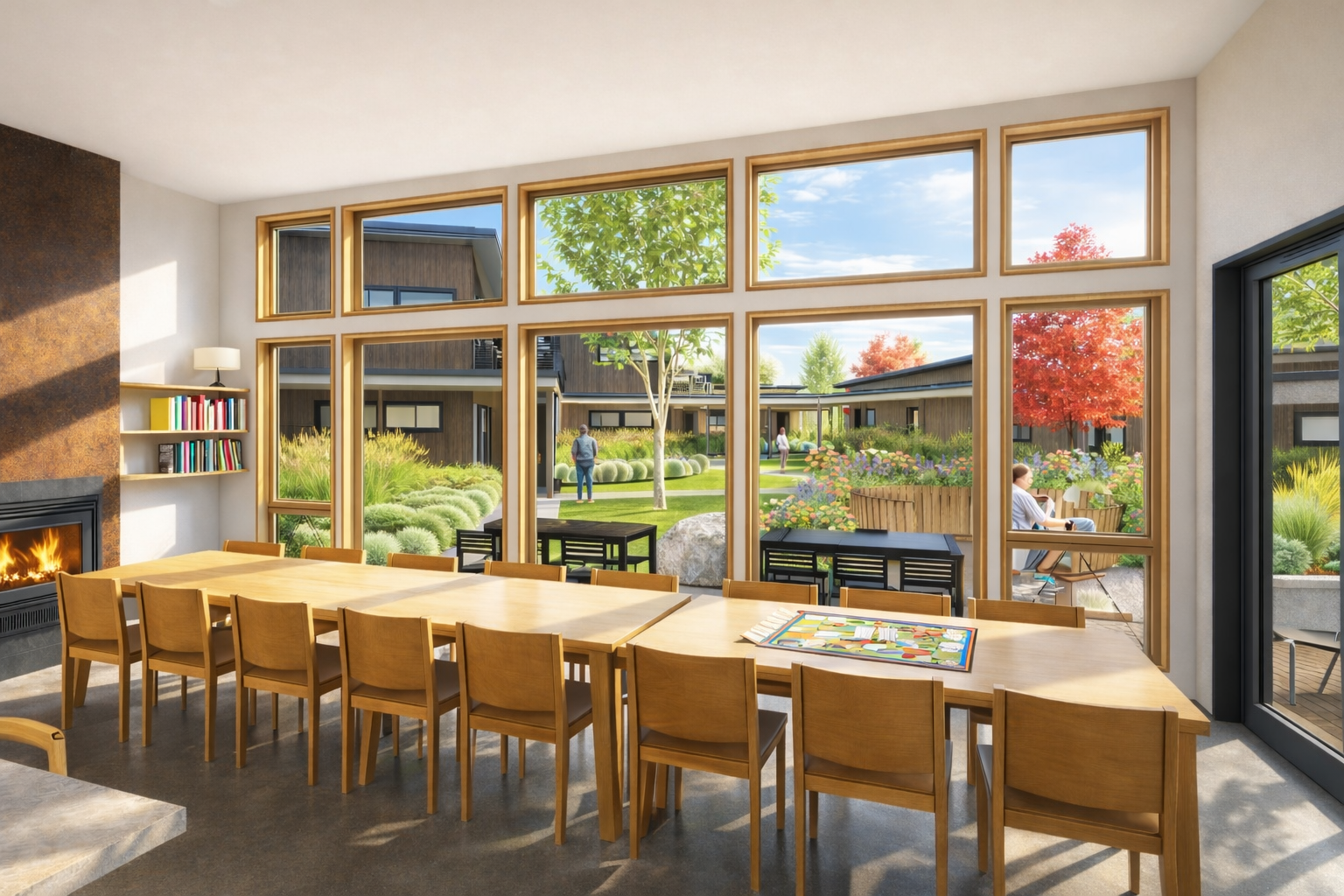
Stonefly is designed to be simple, low-maintenance, and well detailed. The homes focus on proportion, good light, and comfortable volume in the main living spaces, with a consistent palette and high-quality finishes throughout.
The community house is central to the experience, adding space for gatherings and guest visits so private homes can stay right-sized without feeling small. It’s a place you’ll feel comfortable welcoming friends and family. Contact us
Site Plan
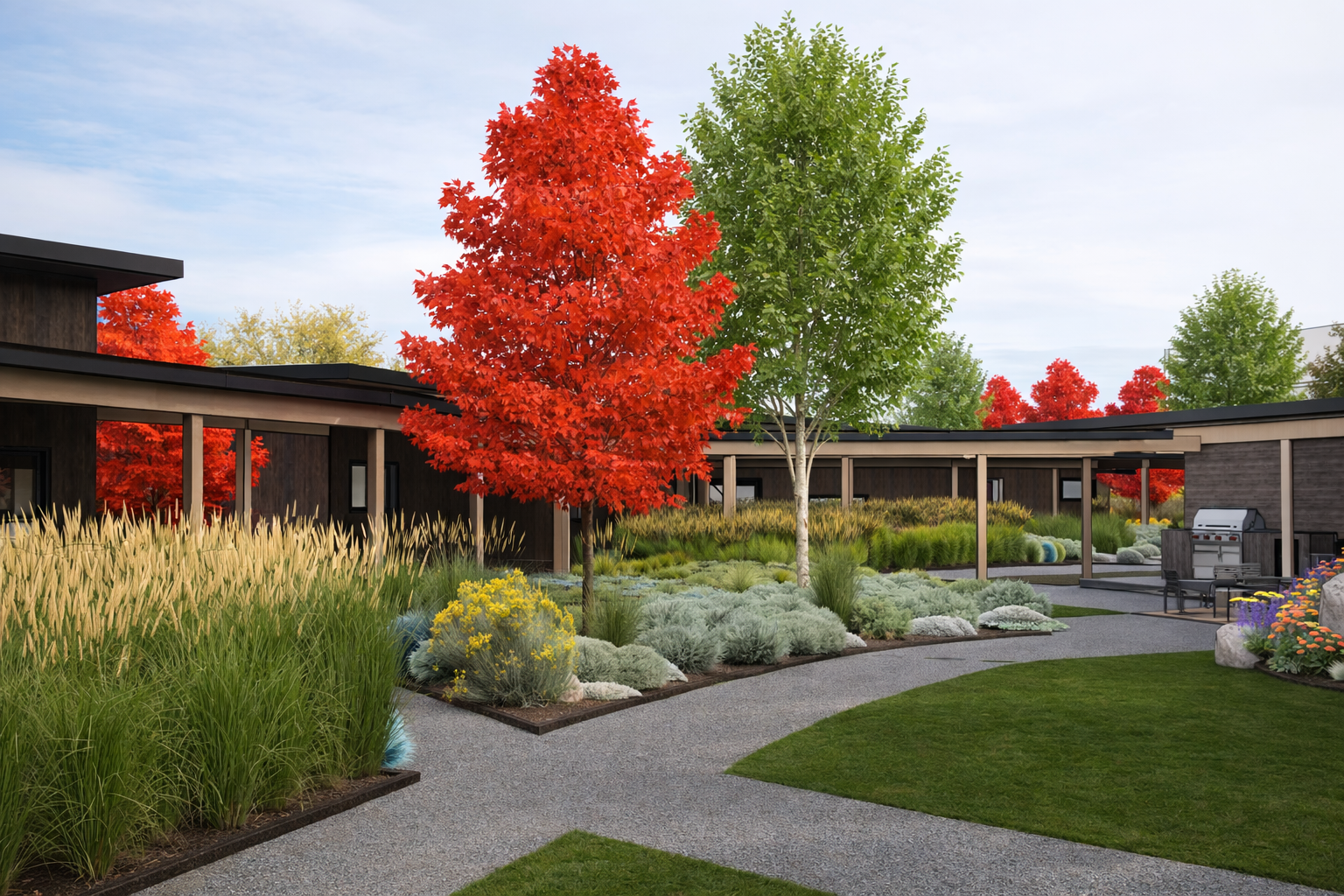
Courtyard 1
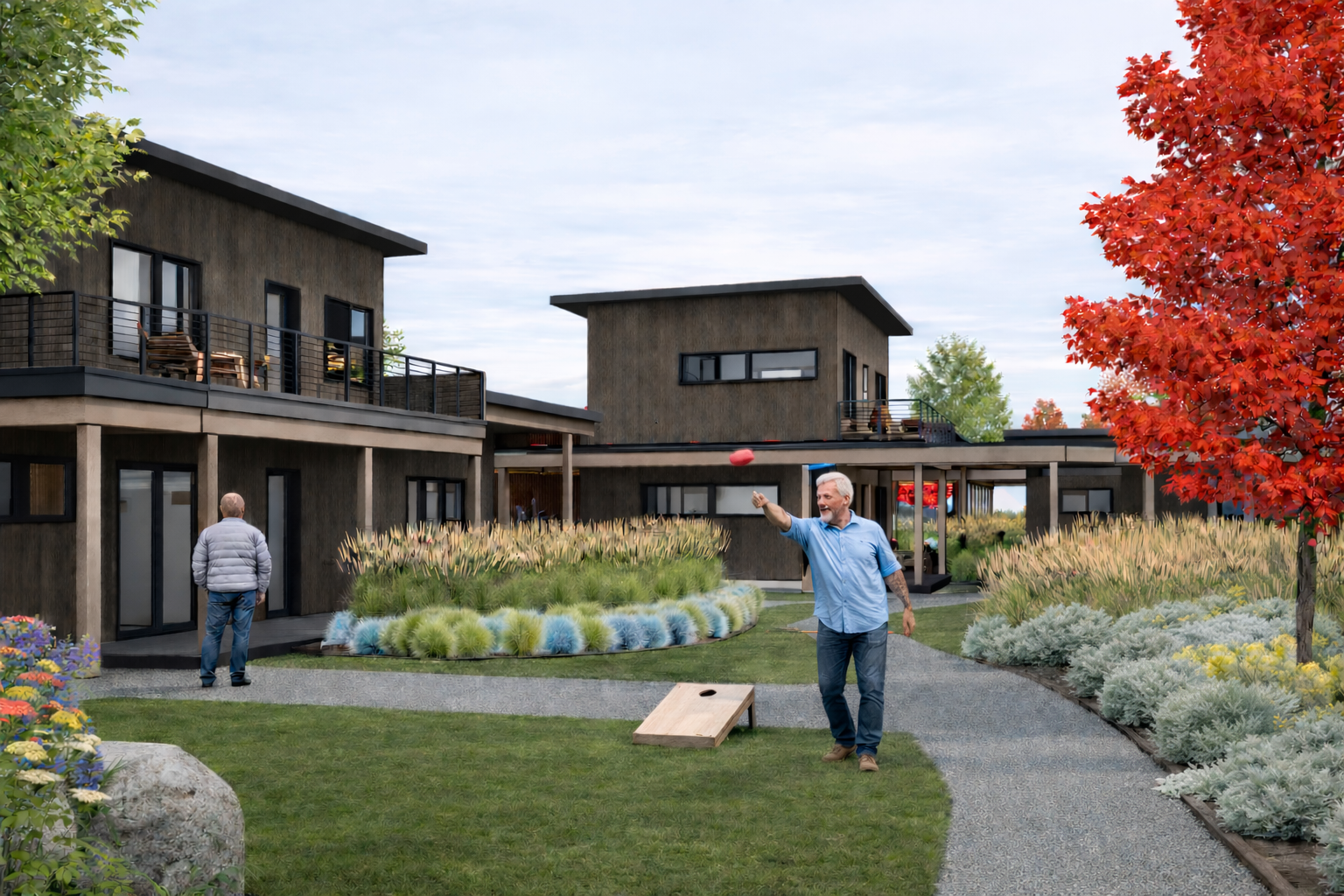
Courtyard 2
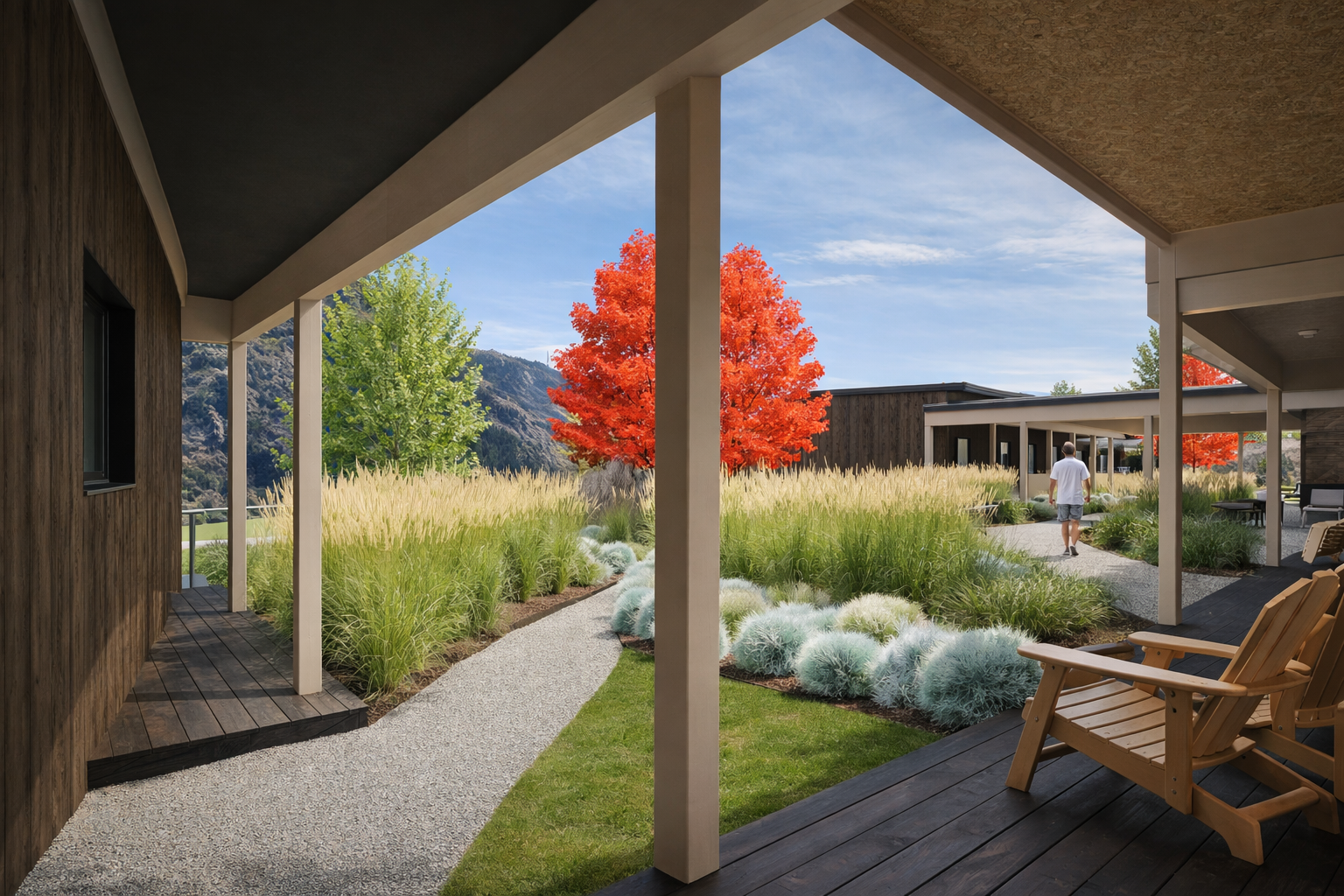
Courtyard 3
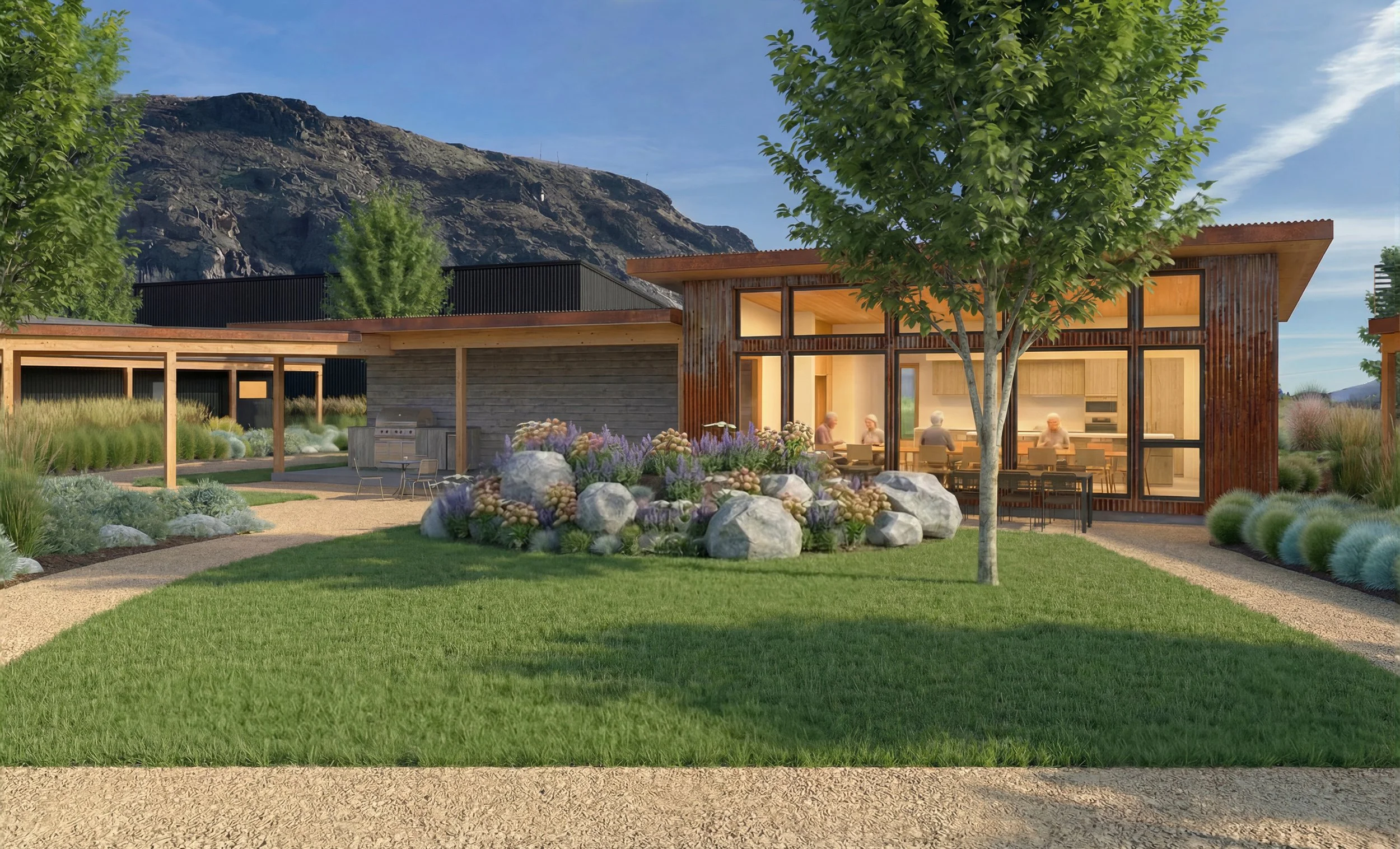
Community house
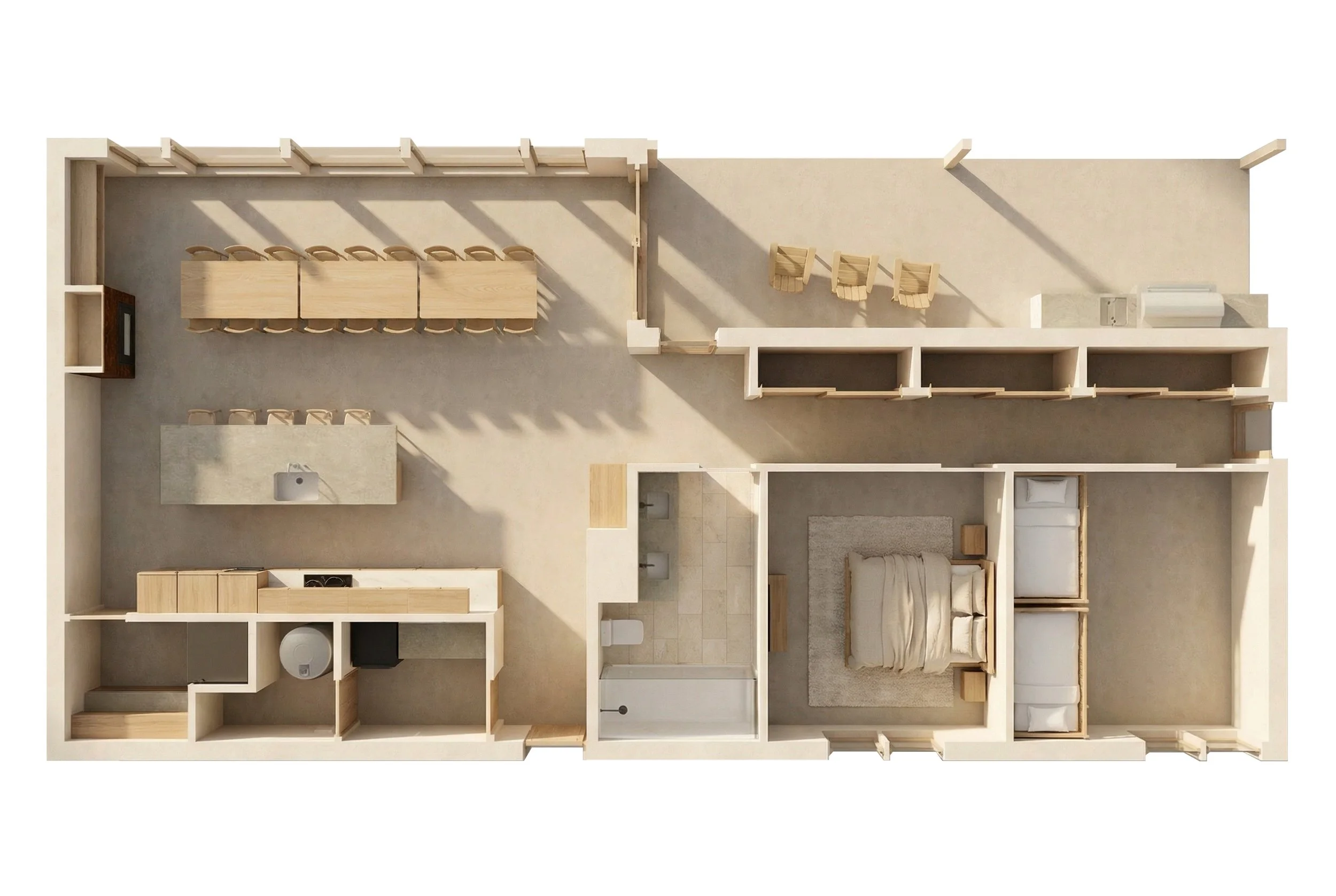
Community house floor plan
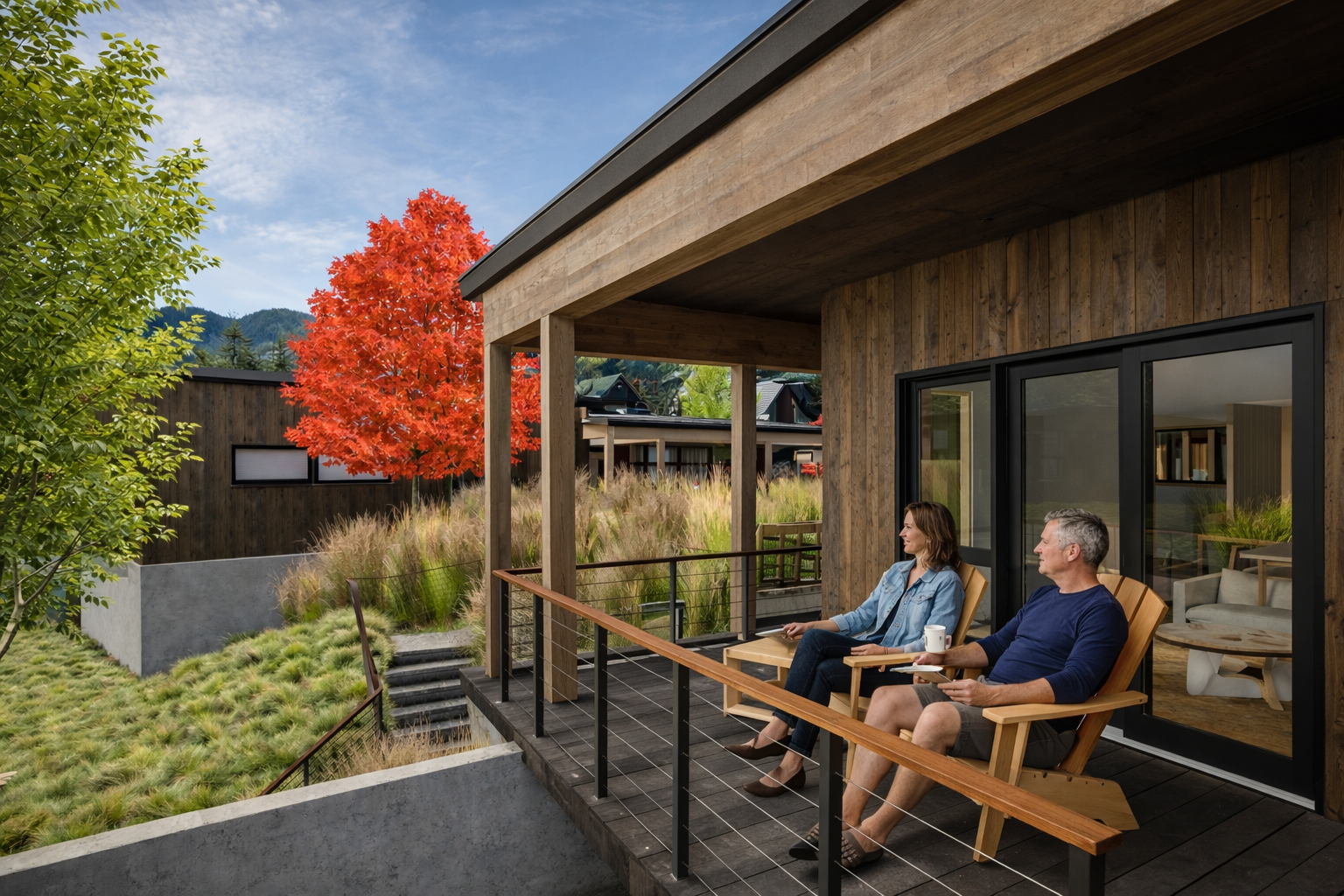
East house deck
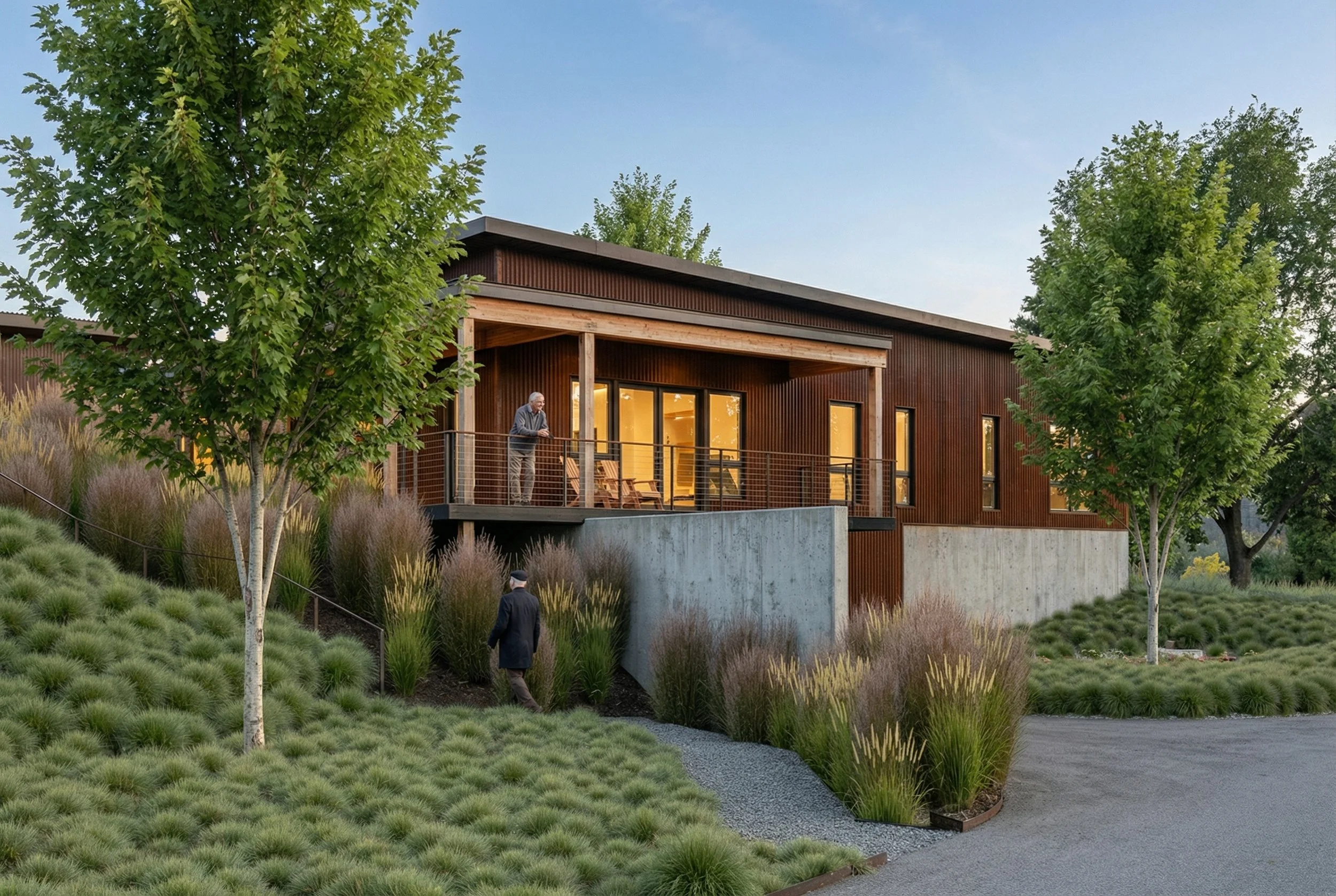
East house river side
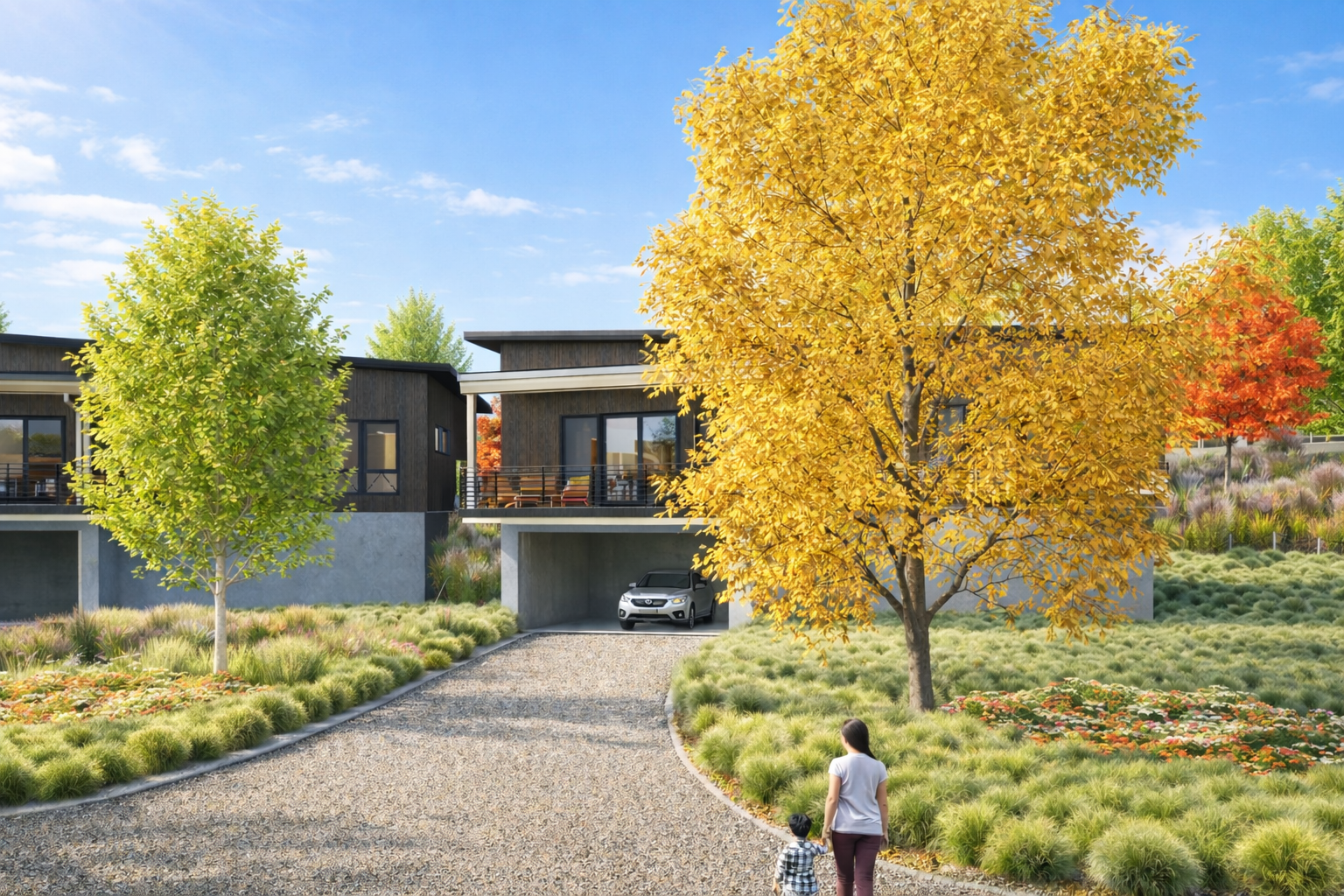
East house driveway
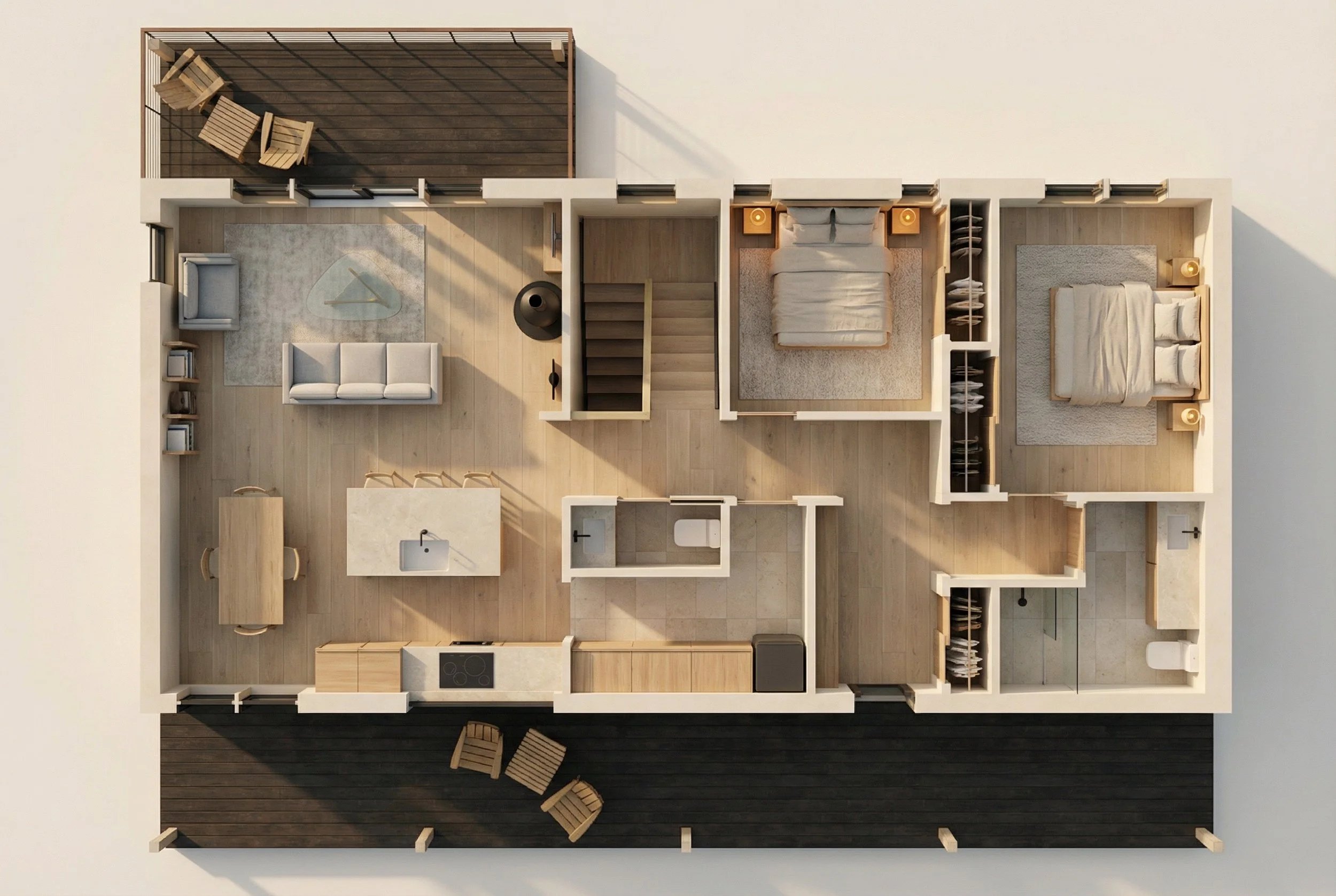
East house floor plan
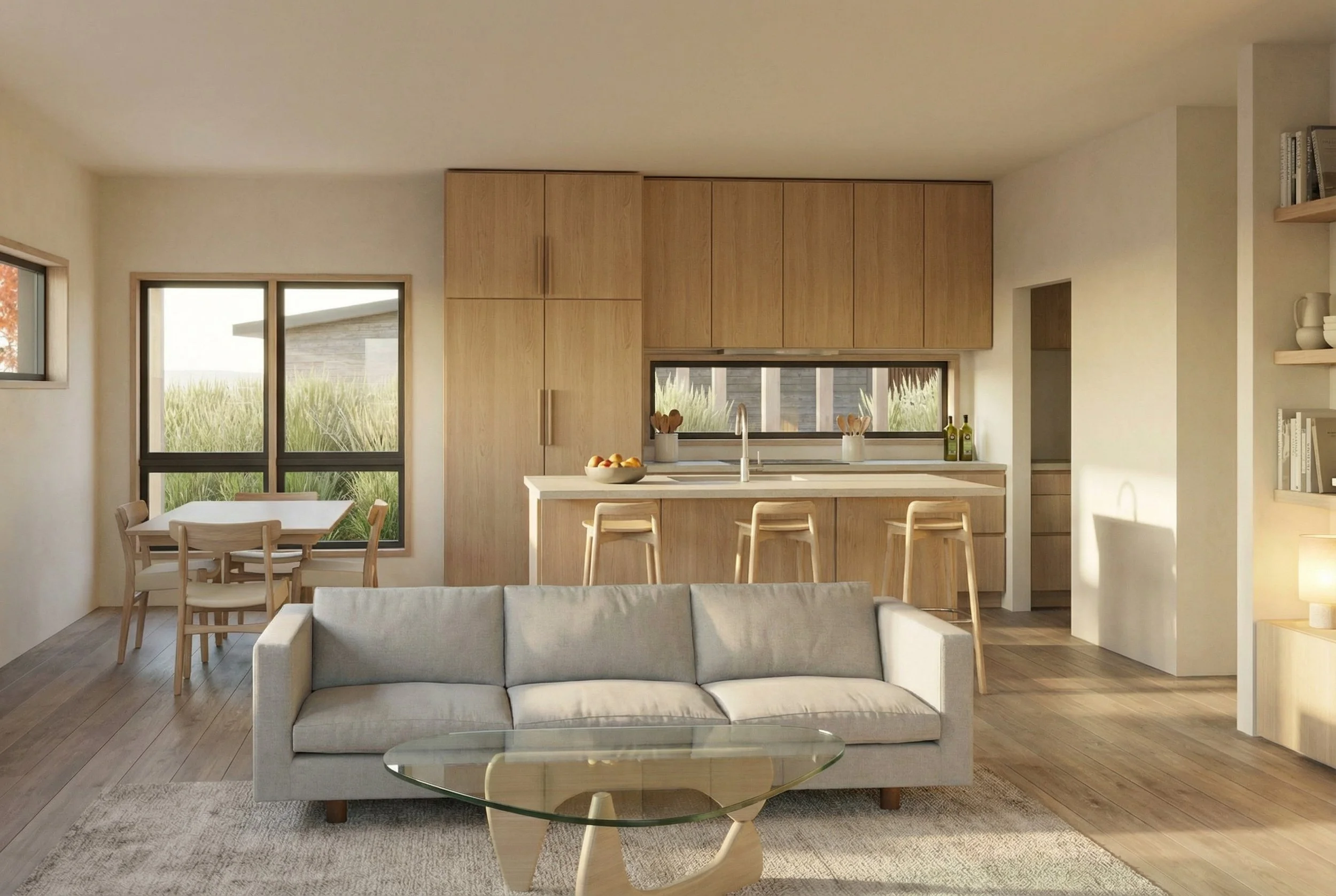
East house kitchen
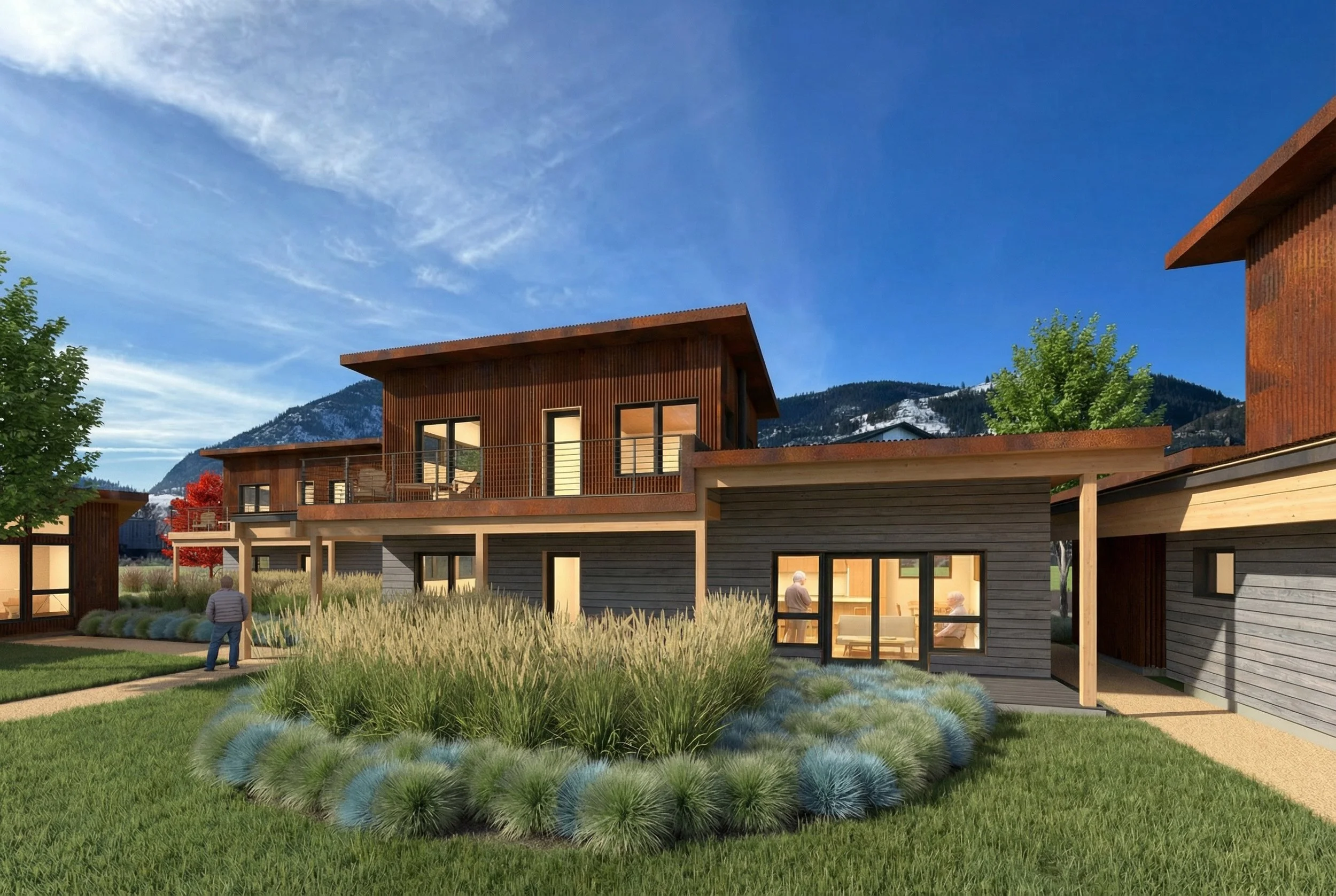
West house two story version
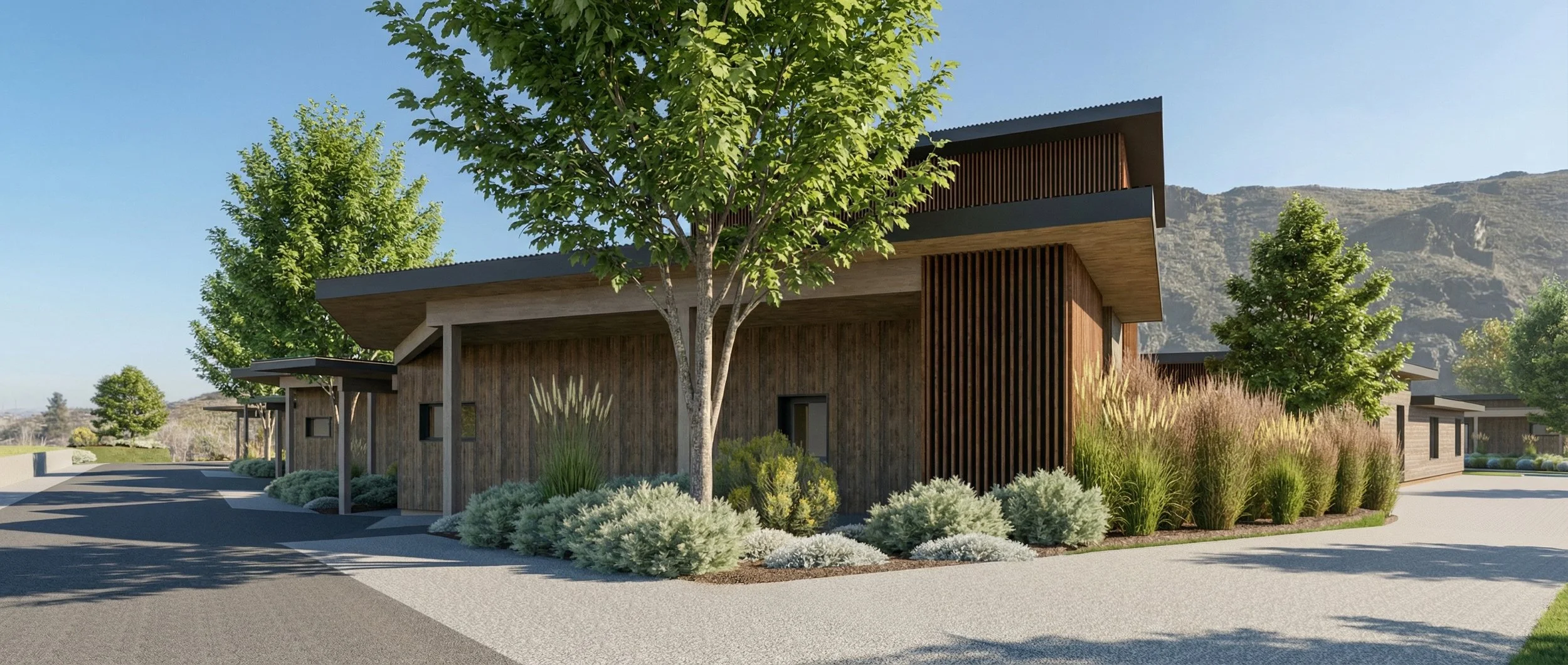
West house from driveway
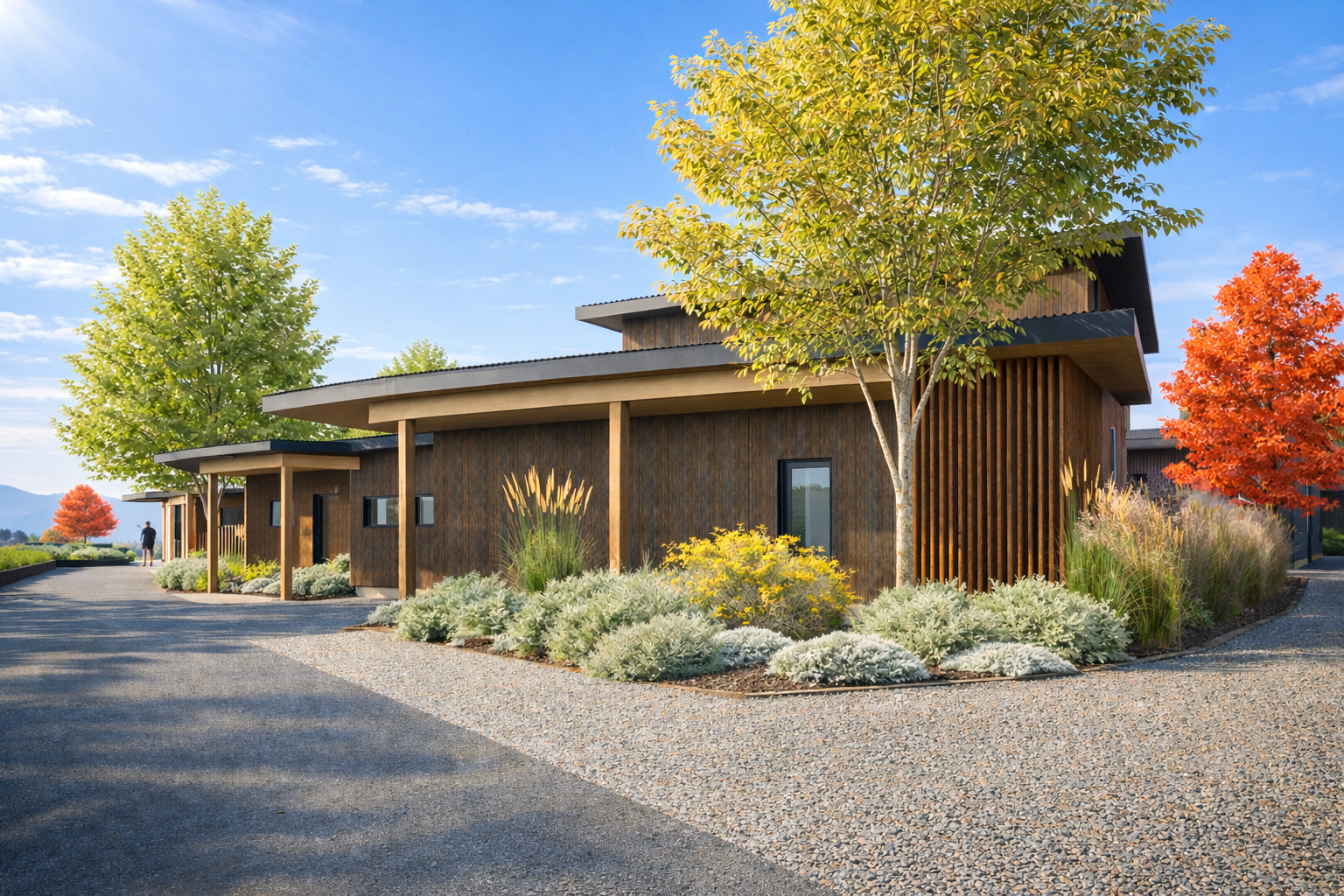
West house driveway
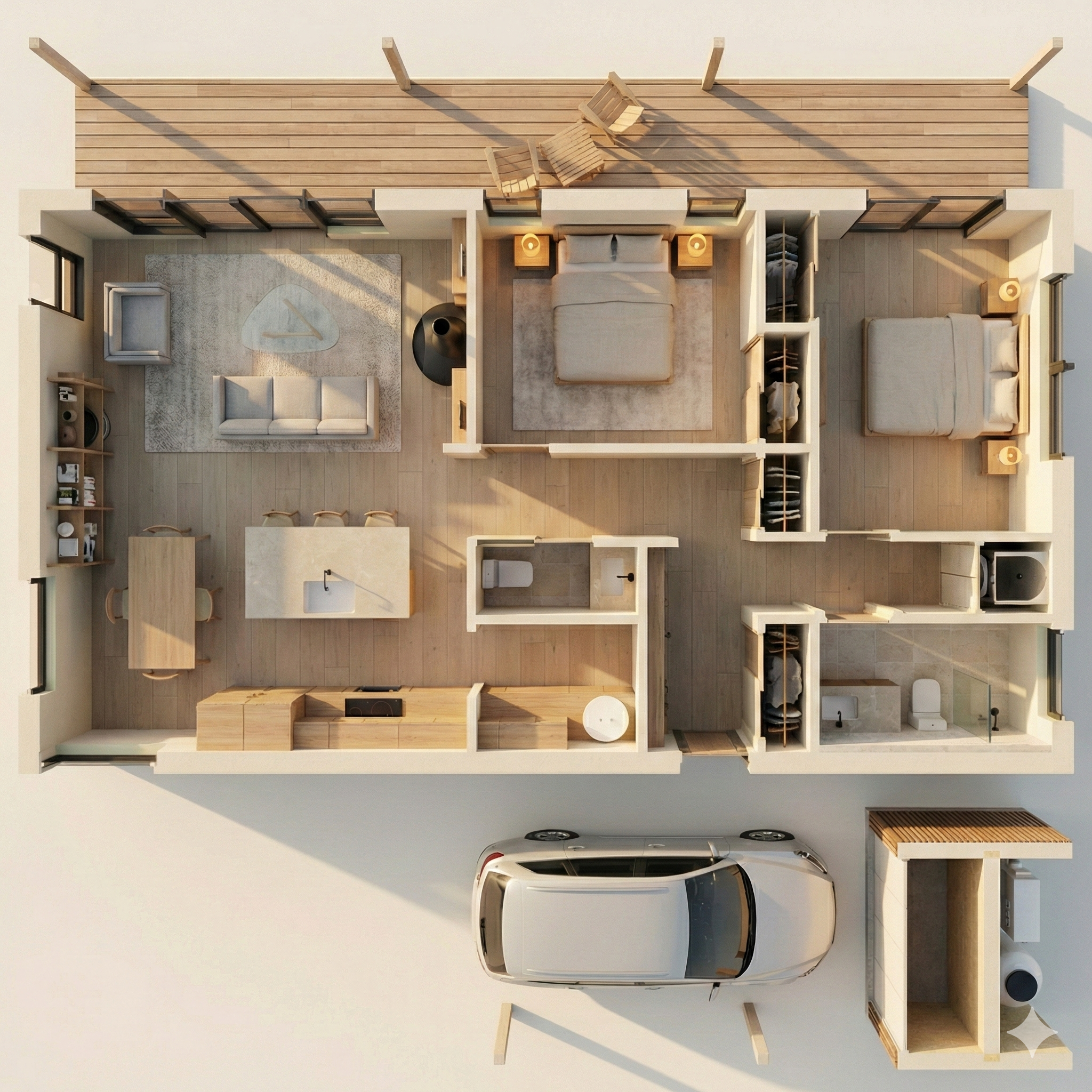
West house 1-story floor plan
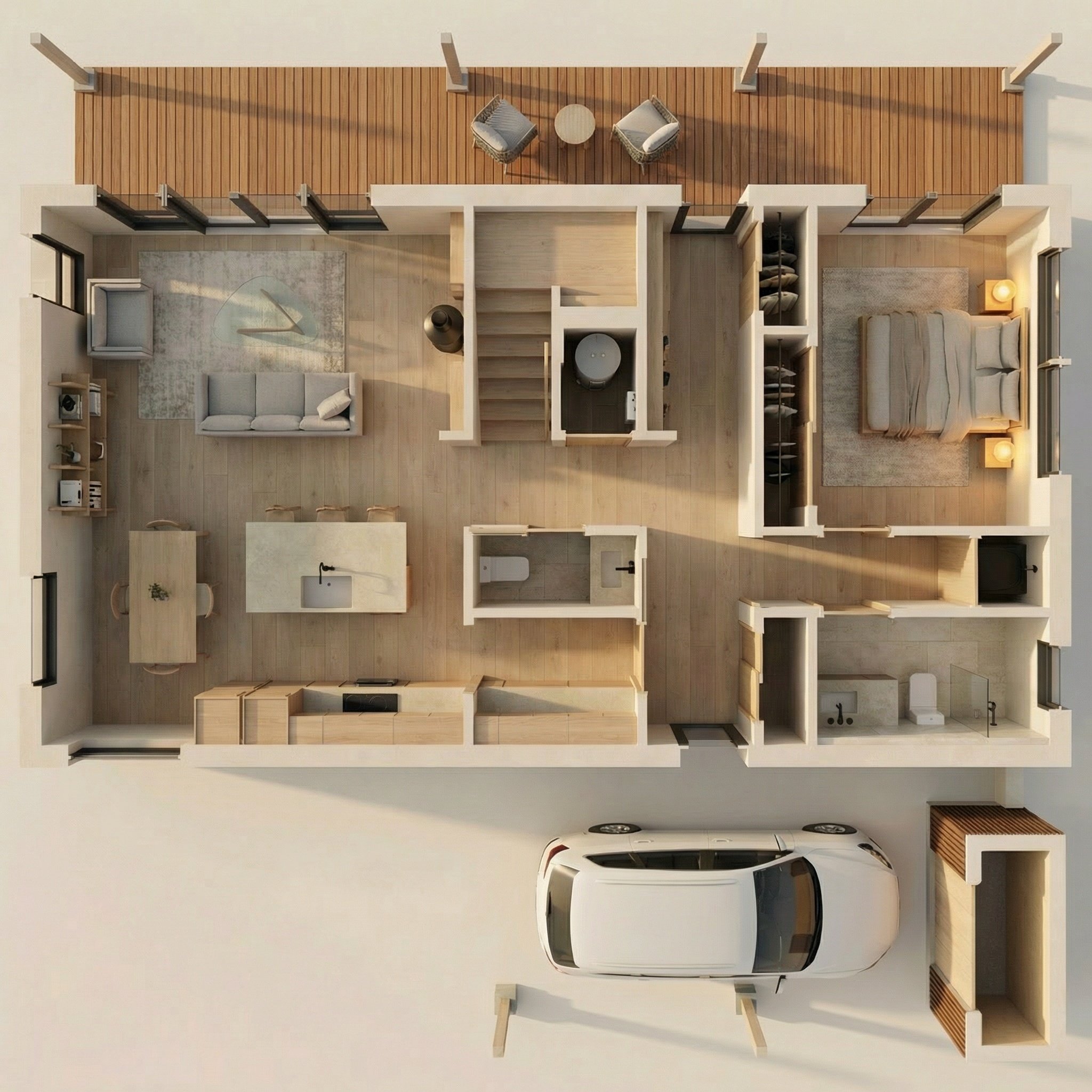
West house 2-story floor plan, first floor
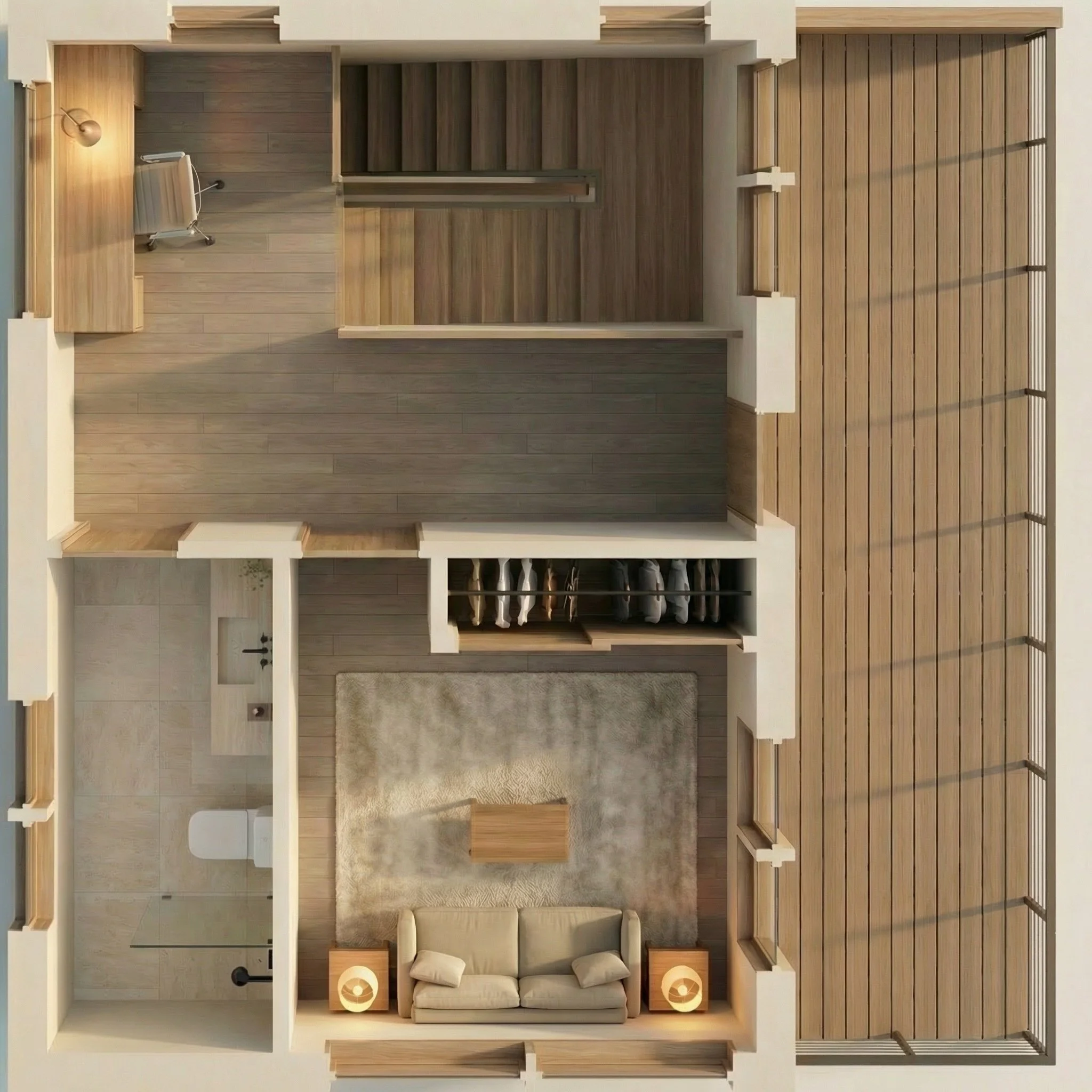
West house 2-story floor plan, second floor
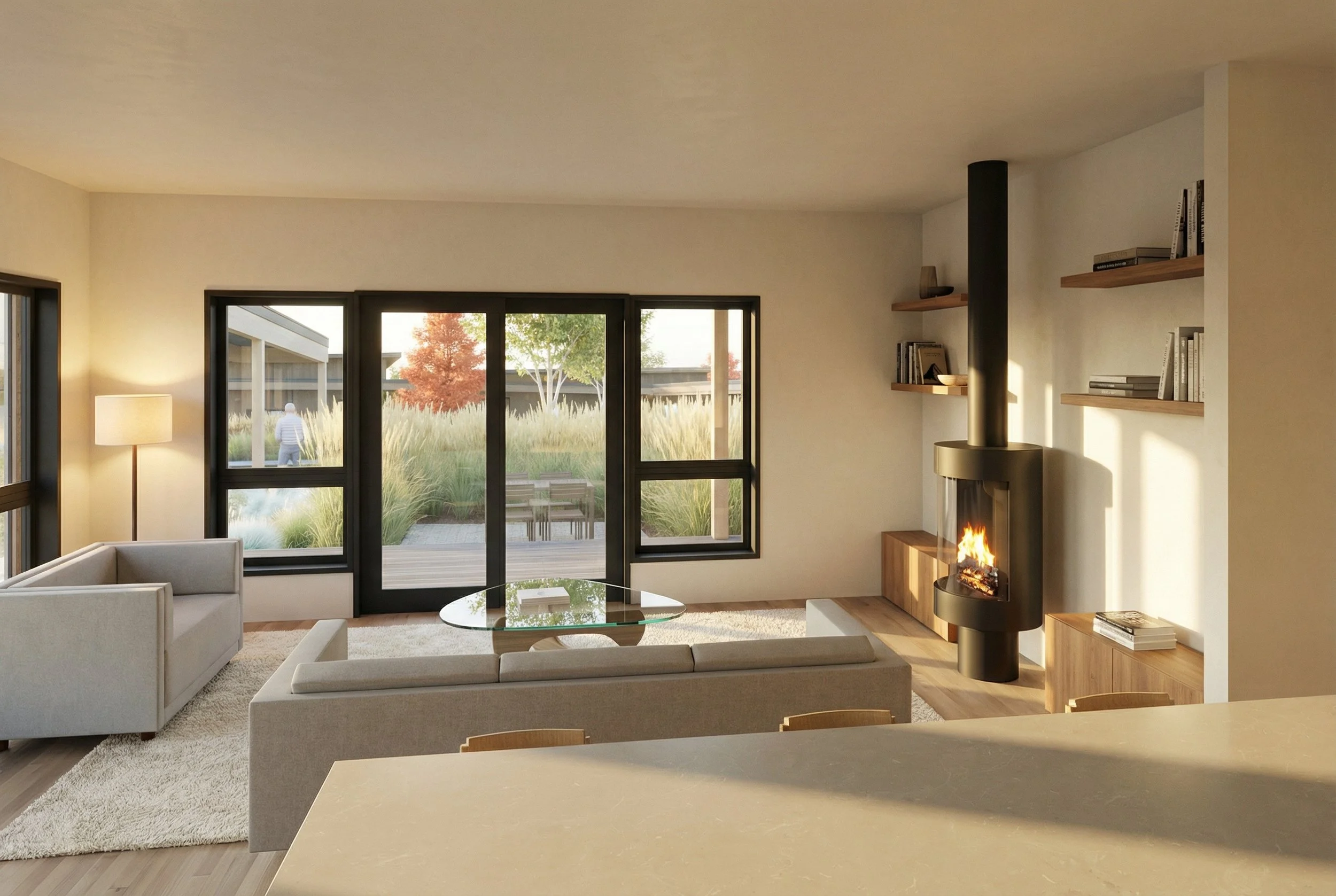
West house 1-story interior
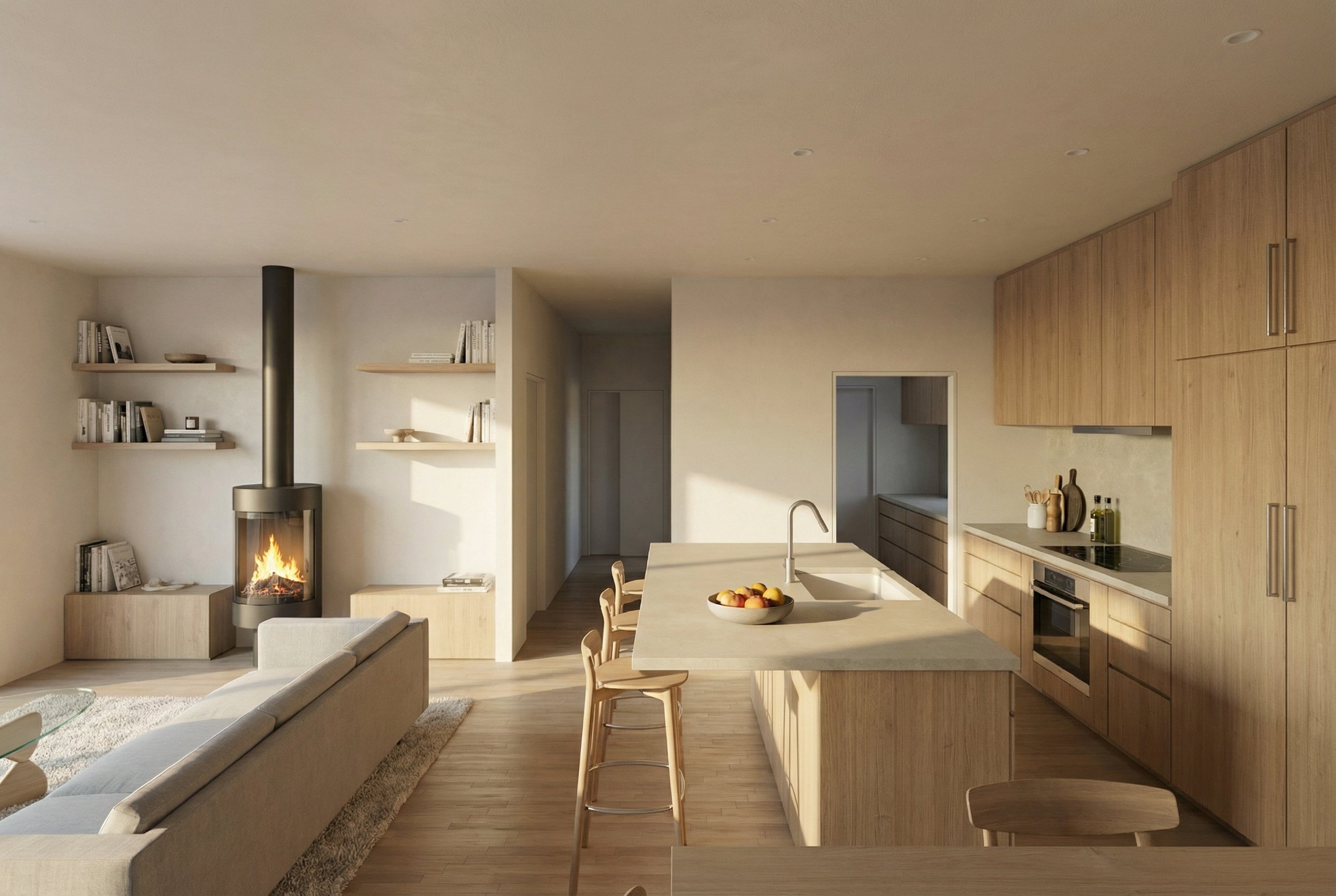
West house 1-story interior 2
An Honest Comparison:
Stonefly and Remote Methow Living
Many Methow homes offer more square feet, more bedrooms, larger garages, and beautiful acreage. Those are real advantages. But for older adults, they are not the whole comparison — and often not the most important one. A remote home also asks you to keep managing winter roads, night driving, snow, repairs, emergency access, long errands, isolation, and future care logistics as if those challenges will stay manageable forever. The following points name what a standard real-estate comparison usually leaves out — the practical, social, and emotional realities that determine whether a home can keep working over time.
1. A home that works when life changes
Aging well requires more than a beautiful house. It requires a setting that still works when driving, mobility, health, or stamina changes.
A remote home may feel independent, but it often depends on everything continuing to go right: safe driving, good weather, physical strength, reliable contractors, and family availability. That is a challenging plan.
Stonefly offers a more resilient one: in town, near support, near care resources, and easier for others to reach.
2. Near the valley’s growing support network
Stonefly’s location matters. Jamie’s Place will be next door, and Methow At Home is part of the broader network helping older adults remain connected, supported, and independent in the Methow.
That does not make Stonefly a care facility. It does mean residents will live close to people, services, and organizations focused on aging well.
For a senior household, that kind of proximity is not a small perk. It is the difference between trying to solve future needs from a remote property and living near a support system already taking shape.
3. More ease built into ordinary life
In a remote setting, everyday tasks can quietly become high-stakes: winter roads, night driving, steep driveways, snow, ice, power issues, emergency access, and long errands.
For a senior household, these are not minor inconveniences. They are predictable challenges.
Stonefly reduces the need to keep managing those challenges alone.
4. Connection without constant planning
Isolation is not solved by good intentions. It is solved by proximity, repetition, and ordinary contact.
A remote home asks people to keep scheduling connection: drive somewhere, invite someone, arrange a visit, make a plan. That works until energy, weather, health, or confidence gets in the way.
Stonefly makes connection easier because neighbors, shared spaces, walks, meals, and small daily encounters are built into the place.
5. A strong answer for families
Families often say, “They’re fine where they are,” until something happens.
Then the questions become pressing: Who can check in? Who can get there? Who noticed? Who can help tomorrow?
Stonefly gives families a more reassuring answer: a small community, an in-town location, nearby services, and a setting where residents are more visible to one another.
6. Staying in the Methow without becoming cut off from it
Living “in the Methow” is not the same as being able to participate in Methow life.
A remote house can slowly turn restaurants, events, errands, classes, theater, walks, and casual visits into special trips. Over time, fewer trips means a smaller life.
Stonefly keeps more of ordinary life within reach.
7. Future-ready, without each household inventing its own system
Aging-in-place technology, home adaptations, transportation options, and support services can help — but only if people can understand, trust, install, maintain, and use them.
Expecting each remote household to figure all of that out alone is unrealistic.
Stonefly can learn and adapt as a group: residents can compare what works, share help, and make useful tools feel normal rather than intimidating.
8. Lower-impact living that matches your values
Many people in the Methow care deeply about land, climate, conservation, and community. But large homes on acreage, long drives, duplicated tools, and spread-out infrastructure make that hard to live out.
Stonefly offers a more honest alignment between values and daily life: smaller homes, shared space, shared resources, less driving, more efficient land use, and a lighter footprint.
This is not about sacrifice. It is about practicing the values many people already hold.
9. Purpose, beauty, and shared daily life
Aging well is not only about safety. It is also about having reasons to step outside, contribute, notice the seasons, and be part of something.
The shared vegetable and flower garden matters here — not as a decorative perk, but as a simple way to create beauty, purpose, movement, conversation, and low-pressure participation.
A remote home can offer solitude. Stonefly offers solitude plus belonging.